Up to $500
Half the price of a home charger
Austin Energy, Texas
OpenProgram terms
Charge overnight in your own garage or driveway. A licensed installer for your area checks your panel, runs the circuit, handles the permit and sets up the charger.
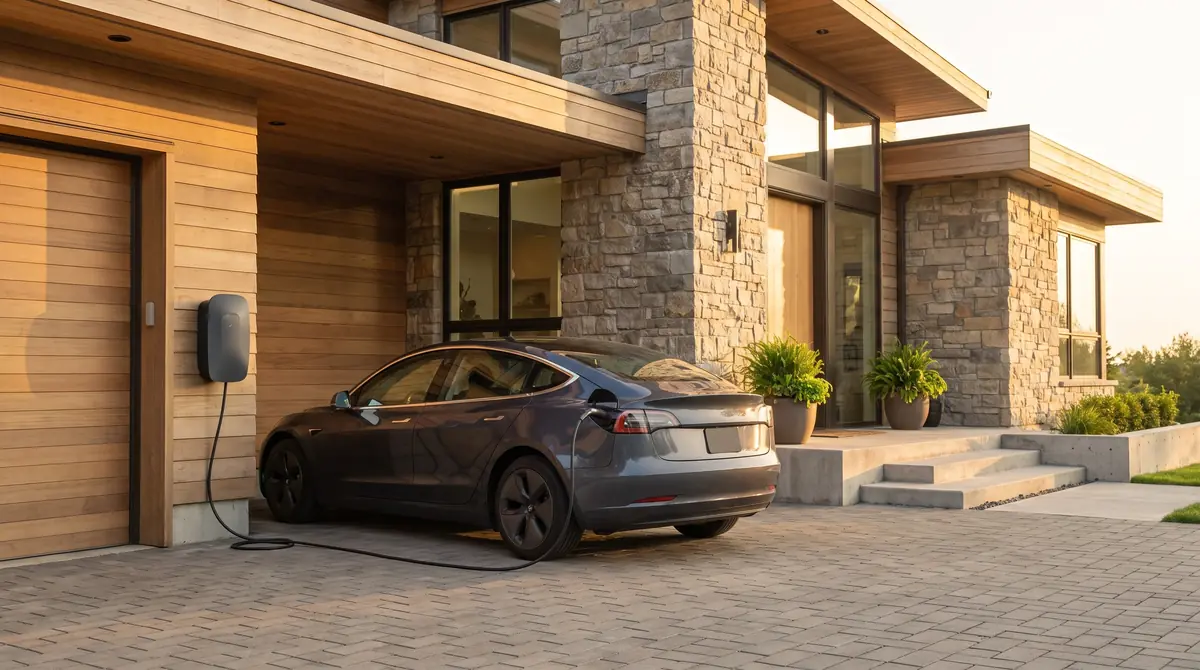
Most home chargers are Level 2, running on a 240-volt circuit like the one a clothes dryer uses. That is enough to refill a typical day's driving overnight. The installer matches the charger and circuit to what your car can take, so you don't pay for power it can't use.
Before anything is bought, the installer looks at your electrical panel: how much spare capacity it has and whether there is room for a new breaker. If it comes up short, they explain the options, from a smaller circuit or a load management device to a panel upgrade.
Some chargers plug into a 240-volt outlet such as a NEMA 14-50; others are wired straight to the circuit. The installer recommends the one that fits your charger and your garage.
Hardwired or plug-in · NEMA 14-50 outlets · Tesla Wall Connector installs
Your installer pulls the electrical permit and books the inspection wherever your town requires them, so the work is on record when you sell the house.
You get a written quote that lists the charger, the wiring, the permit and any panel work, so you can see what you are paying for and set it beside any other quote.
Many power companies and states pay part of the cost of a home charger. These programs are open now.
Up to $500
Austin Energy, Texas
Up to $700
Maryland Energy Administration, Maryland
Up to $750
SMUD, Sacramento, California
Up to $800
PowerUpRI, Rhode Island
Amounts from each program’s published terms, checked October 13, 2026.
Send your ZIP code and phone number, and a licensed installer for your area gets in touch to set up the visit.